
Our guest blogger is Matt Wagner, Ph.D. – Chief Program Officer for Main Street America, responsible for driving the organization’s field service initiatives. His professional background involves nearly 30 years of non-profit management and teaching experience in downtown revitalization, entrepreneurship and economic development.
Brief Introduction by Jenny Crittenden, President and CEO of Retail Alliance:
Wow! What a great event we had to present our inaugural Retail Alliance: Virginia Retail Matters report! With over 200 attendees, Matt Wagner showcased the trends and stats that all commercial district leaders need to know. Let’s recap! Take it away, Matt.
Whether it’s the latest news around Musk or Zuck, the latest bank merger, or social media brand shift, the reality is that the vast majority of our national and Virginia state economy is driven by Main Street small businesses. In fact, here in Virginia, there are 34,766* retail trade businesses, which represents about 12.5% of the state’s businesses overall. In addition, those retail trade businesses have a total of 467,089 employees—about 11.5% of the state’s jobs. That equates to an average of 13.4 employees per business. The important indicator is that the retail sales sector raises most of Virginia’s sales tax revenue, ranging between 58% and 63% of the state’s totals on an annual basis. During the peak of the COVID-19 pandemic in 2020, retail sales accounted for $66.2B** in sales tax revenue, 63% of the state’s total. But, what the study highlights is that there is still room for growth. In an examination of neighboring states, Virginia is trailing most when it comes to the number of retail businesses per capita, as well as employees per capita. In fact, Virginia’s neighbor to the south, North Carolina, has .47* retail businesses per capita, whereas Virginia only has .40*.

Being able to drive further growth will take both savvy small business owners and place professionals to navigate the fast pace of changing trend lines. For small businesses, that means recognizing generational shifts, which are leading to greater integration of social commerce strategies, i.e. shopping through channels like TikTok and transitioning from emailing your customers to adding SMS texting that has a 98% open rate and a 45% response rate! For place professionals, we need to think differently about retail spaces as the size of stores are expected to continue the “great shrink.” We anticipate seeing far more collaborative / complementary spaces and micro retailing spaces that increase density of retail and experiences in our districts and leverage the sizable growth of emerging entrepreneurs seeking to transition from home to a storefront.
Given the tremendous interest and because we are SO very grateful to DHCD for their sponsorship of the Virginia Retail Matters report and event, we welcome you to download the full report and learn more!
In summary, not only does retail matter, but it’s vital to the state’s economy, and as we see as part of the new norm post-pandemic, retail is also a critical part of our quality of living that drives human capital living decisions. In turn, that means for broader economic development efforts, having a great retail sector is paramount to attracting and/or retaining talent for housing, industrial and tech-related growth. Retail is at the center of our communities, and now you have the latest trends and tools to strategize and deliver services to this crucial sector in your local economy. Happy reading!
*Esri / Data Axle
**State of Virginia
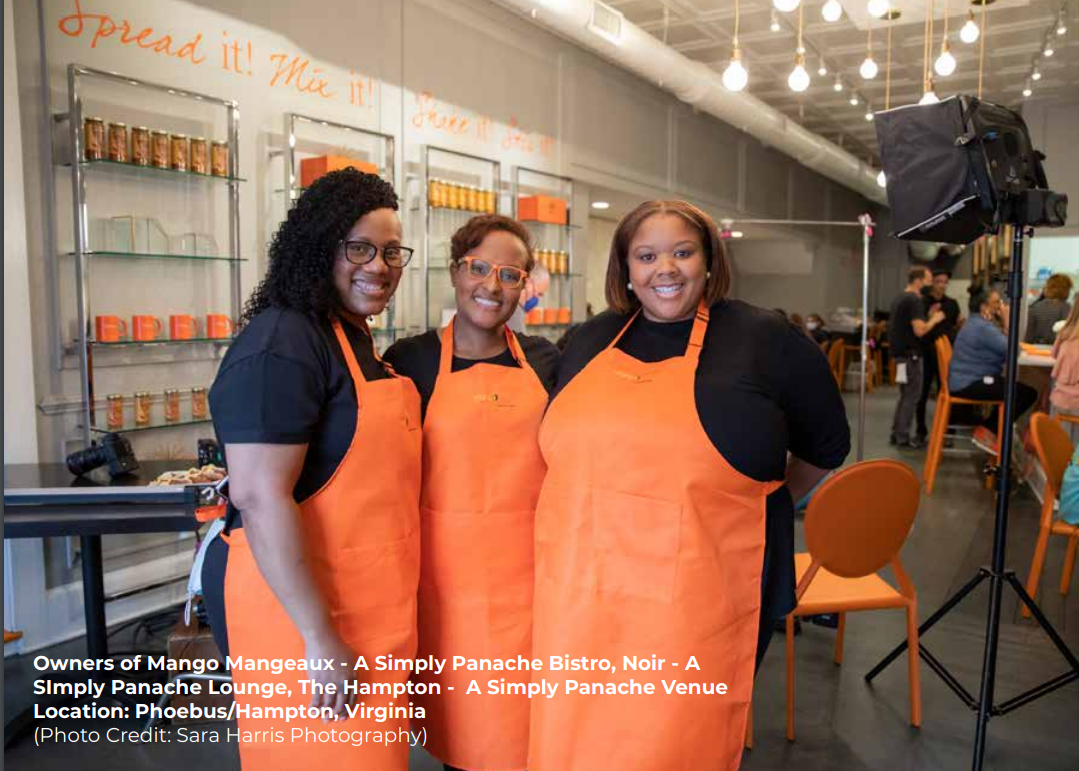
Image Credit (Mango Mangeaux) – Sara Harris Photography
Image Credit (Juan Carrillo) – Sara Harris Photography
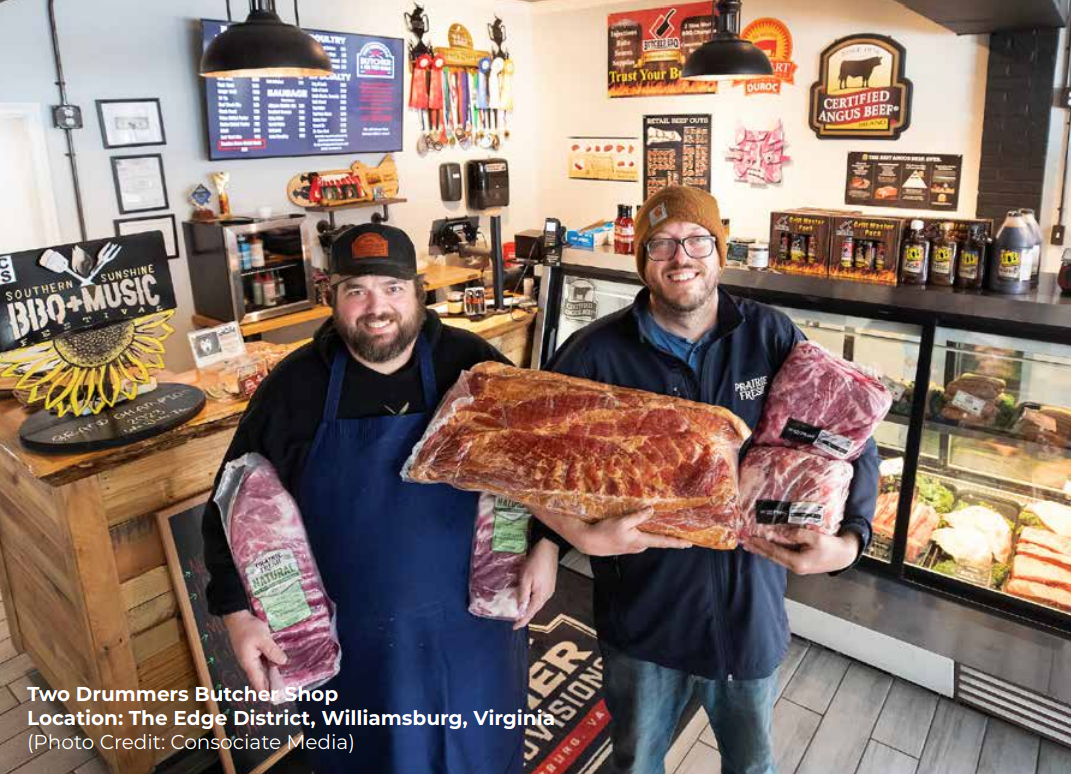
Image Credit (Two Drummers Butcher Shop) – Consociate Media
Image Credit (Virginia Retail Matters) – Retail Alliance
 Virginia Main Street