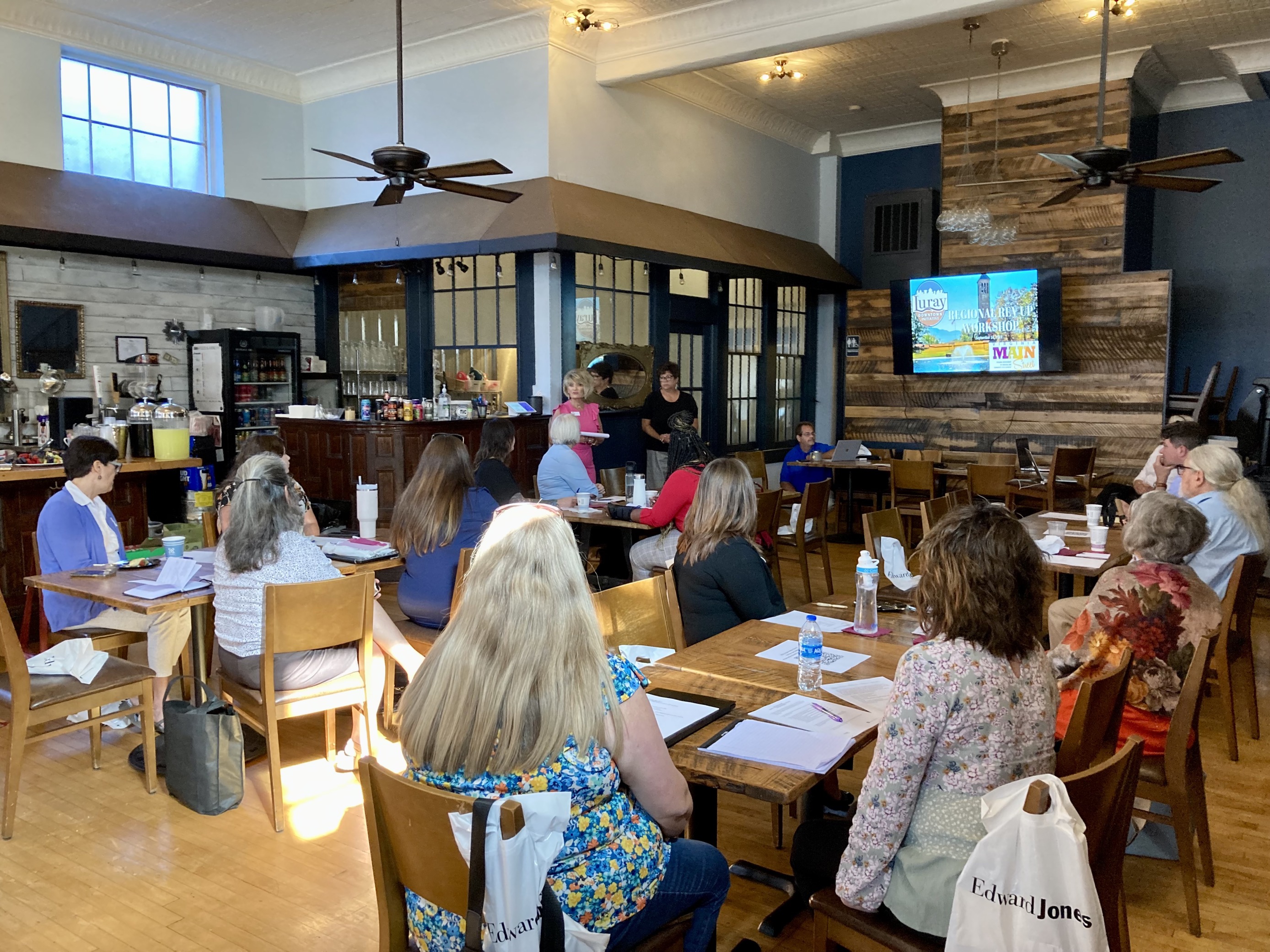
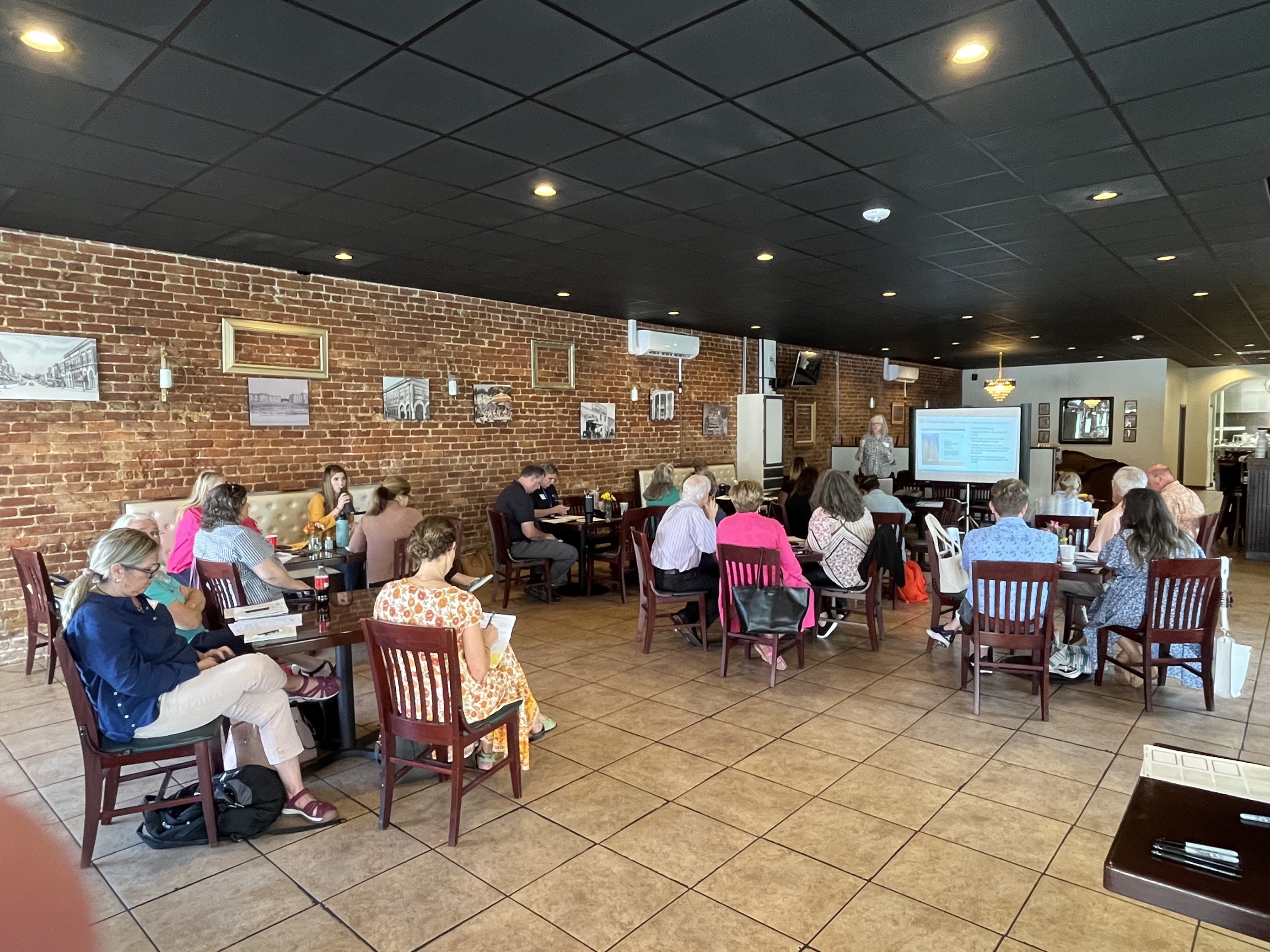
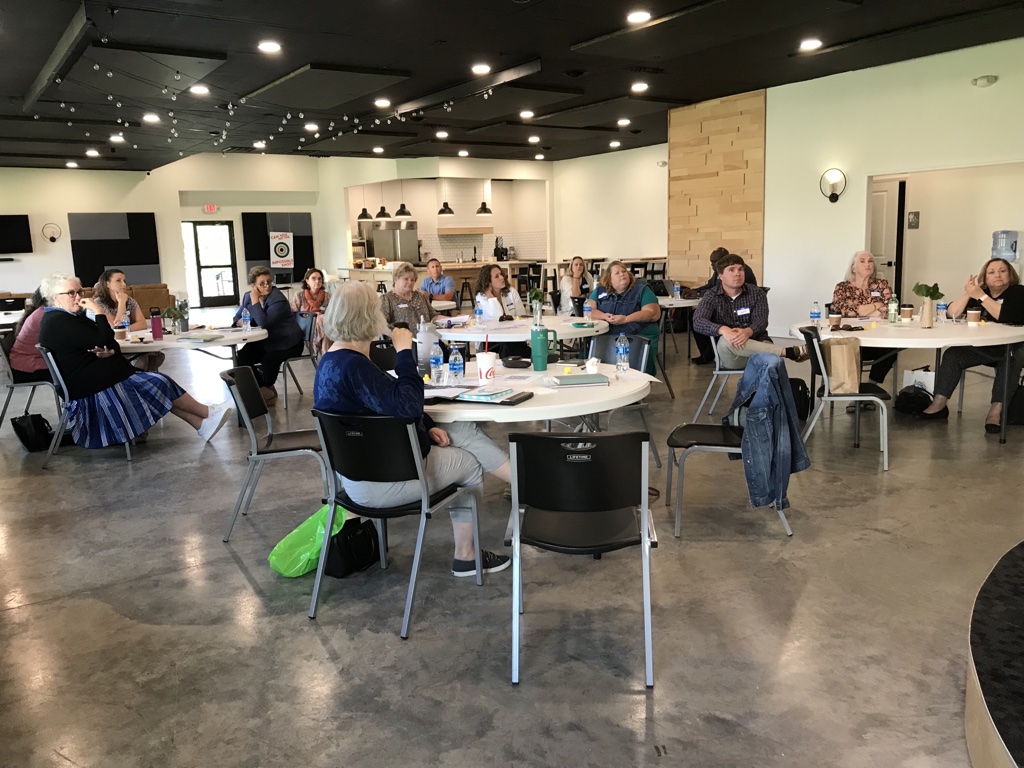
Last month, Virginia Main Street (VMS) professionals from around the Commonwealth met in-person for an immersive half-day workshop on Main Street America‘s (MSA) fifth Accreditation Standard – Preservation-Based Economic Development. This standard highlights the importance of leveraging a community’s unique historic and cultural assets to promote economic development.
Kathy Frazier, co-founder and Principal-in-Charge of Frazier Associates, led the workshop. Kathy stressed the importance of knowing existing, local resources that support preservation and quality design—such as design guidelines, sign ordinances, zoning and/or architectural review boards or historic preservation commissions. She also emphasized the importance of understanding available local, state, and federal preservation incentives. Knowing what tools and resources already exists will allow your Main Street organization to lean into the expertise of other groups and prevent duplication of services.
To get started, Kathy recommends utilizing the Virginia Department of Historic Resources’ interactive database of Virginia Landmarks Register and/or National Register of Historic Places to download the nomination form for your historic district. This form includes a statement of significance and descriptions of contributing buildings, which tell the story of your district. These stories can be recognized and elevated through preservation efforts.
If you don’t already have local design guidelines, Kathy suggests your design committee work with preservation design experts such as your State Historic Preservation Officer and local architectural firms to establish guidelines based on the Secretary of Interior’s Standards for the Treatment of Historic Properties. Design guidelines can be a resource for property owners and contractors who may not have experience rehabilitating historic buildings. The design committee should dig deeper to understand what funding sources are available including state and federal tax incentives. Design guidelines are not legally binding, and tax incentives, grant programs, loan pools, and ordinances are ways to incentivize them.
Lastly, Kathy strongly encourages design committee volunteers to walk their downtown district utilizing the design assessment to determine whether buildings, infrastructure, and spaces are contributing in a positive, neutral, or negative way. (Going further, consider assessing individual buildings denoting maintenance issues.) Through this activity your Main Street program can begin to identify areas of high priority to guide future efforts.
If you’d like to learn more about Preservation-Based Economic Development, and you weren’t able to catch the workshop, a recording is now available, along with the presentation slides. Additionally, check out MSA’s Main Street Foundations: Design video and accompanying resources.
Photo Credits: Blaire Buergler, Zachary Whitlow & Courtney Mailey
 Virginia Main Street