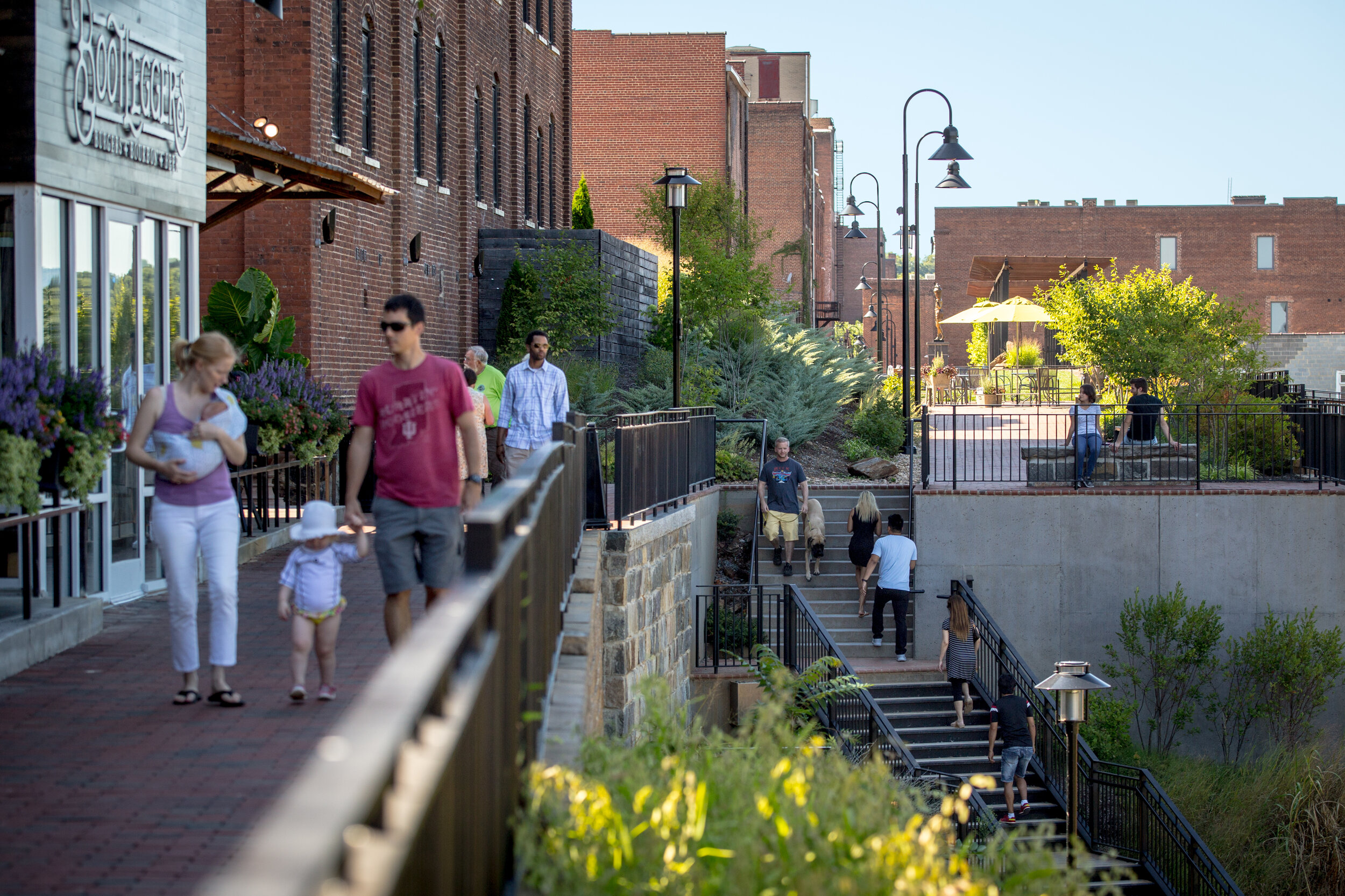
A walkable community isn’t just nice to have; it’s essential for encouraging residents and visitors to spend more time in your downtown! By fostering walkability in your Main Street district, you can help boost the local economy and cultivate a strong sense of place. You just experience a place differently when you walk around it rather than drive through it.
As people are able to stroll easily and safely around downtown, they find themselves naturally drawn to explore local businesses, leading to increased spending and longer stays. Studies show that pedestrians and bicyclists tend to spend more time and money than people driving through a community.
Here are a few resources in Virginia available to help communities foster safer walking:
Safe Routes to School – Virginia Department of Transportation
Safe Routes to School (SRTS), a federally funded program, focuses on promoting safe walking and biking to school for children. The program offers several grant opportunities tailored to different needs:
- QuickStart Mini-Grants: These grants provide $1,000 to kickstart smaller projects, enabling communities to build momentum in enhancing walkability.
- Walkabout Mini-Grants: Designed to conduct hands-on walkability and bicycling assessments, these grants culminate in comprehensive reports that inform subsequent projects and grant applications.
Virginia Walkability Action Institute – Virginia Department of Health
The Virginia Walkability Action Institute (VWAI) offers a year-long program that educates and provides technical assistance on various walkability issues. Additionally, the program offers special project funding through a pitch contest, enabling communities to implement innovative solutions to pedestrian and bicyclist safety concerns. Projects funded through VWAI encompass a wide spectrum, including tactical urbanism, public promotions, ad road safety assessments.
Virginia Recreational Trails Program – Virginia Department of Conservation and Recreation
Grants through the Virginia Recreational Trails Program (VRTP) support the development and maintenance of recreational trails, including pedestrian-friendly pathways within communities. Non-profit organizations, in collaboration with local government entities, can compete for funding. RTP grants require an 80%-20% matching reimbursement.

Image Credit: Downtown Lynchburg Association
Image Credit: Old Town Crier
 Virginia Main Street