By now, we have all seen images of the devastation caused by Hurricane Helene. From Florida and Georgia to the Carolinas and Tennessee, communities are reeling from a myriad of losses. Some places without power, Wi-Fi, or cell service have not yet been fully assessed so the extent of the damage remains unknown. What we do know is that the impacts will be felt far beyond the area of physical damage and that it will take years for many areas to recover, while other areas may not recover at all.
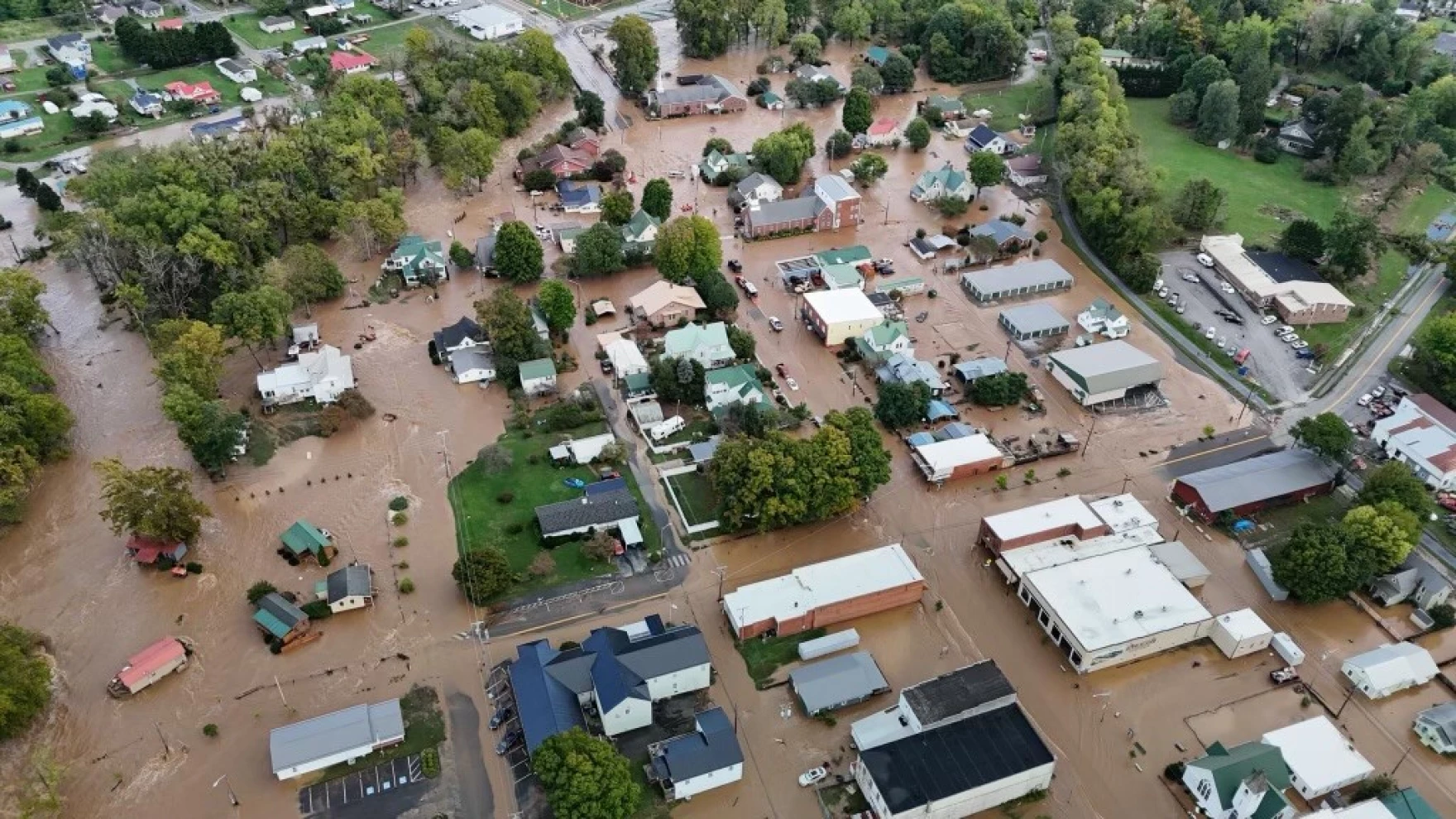
Virginia did not escape this storm unscathed, reporting hundreds of buildings destroyed or damaged and thousands without power and water in the Southwest area of the state. Downtown Damascus, a town of approximately 800 people in Washington County and an active trail town, sustained significant damage as seen below.
As the water recedes and the situation is assessed, the Virginia Department of Housing and Community Development (DHCD) and the Virginia Main Street (VMS) program will work with our partners, local leadership, and our communities as the work of repairing and rebuilding begins.
Recently, Main Street America (MSA) published the Main Street Disaster and Resilience Toolkit to assist communities to plan, prepare, respond, and recover from natural disasters.
“As of June 2024, 68% of our designated Main Street district are within census tracts identified as climate vulnerable by the U.S. Environmental Protection Agency’s (EPA) Climate and Economic Justice Screening Tool (CEJST), which is an indicator that a community has limited economic resources and is also highly vulnerable to disaster risks such as expected agriculture loss or extreme flood risk. Main Street America is committed to prioritizing initiatives to help our communities prepare for and adjust to climate change and disaster impacts.”
– Erin Barnes, CEO & President, Main Street America
The National Park Service also has a disaster preparedness training program – Building Disaster Resilience – in the works through a partnership with MSA. Utilizing funding from the Emergency Supplemental Historic Preservation Fund this program will “create a clearinghouse of curated resources, create a toolkit with strategies and worksheets for the most frequent disasters, and hold workshops and trainings related to disaster preparedness and resilience.”
Make a plan for your community. Be prepared for the unexpected. Build resilience into your business. As state resources become available for Helene relief, we will publish them here and tune in to Cardinal News for the latest from the region and information on where to find help and how to offer help.
Photo Credit: The Trek, Tyler Eugene
 Virginia Main Street