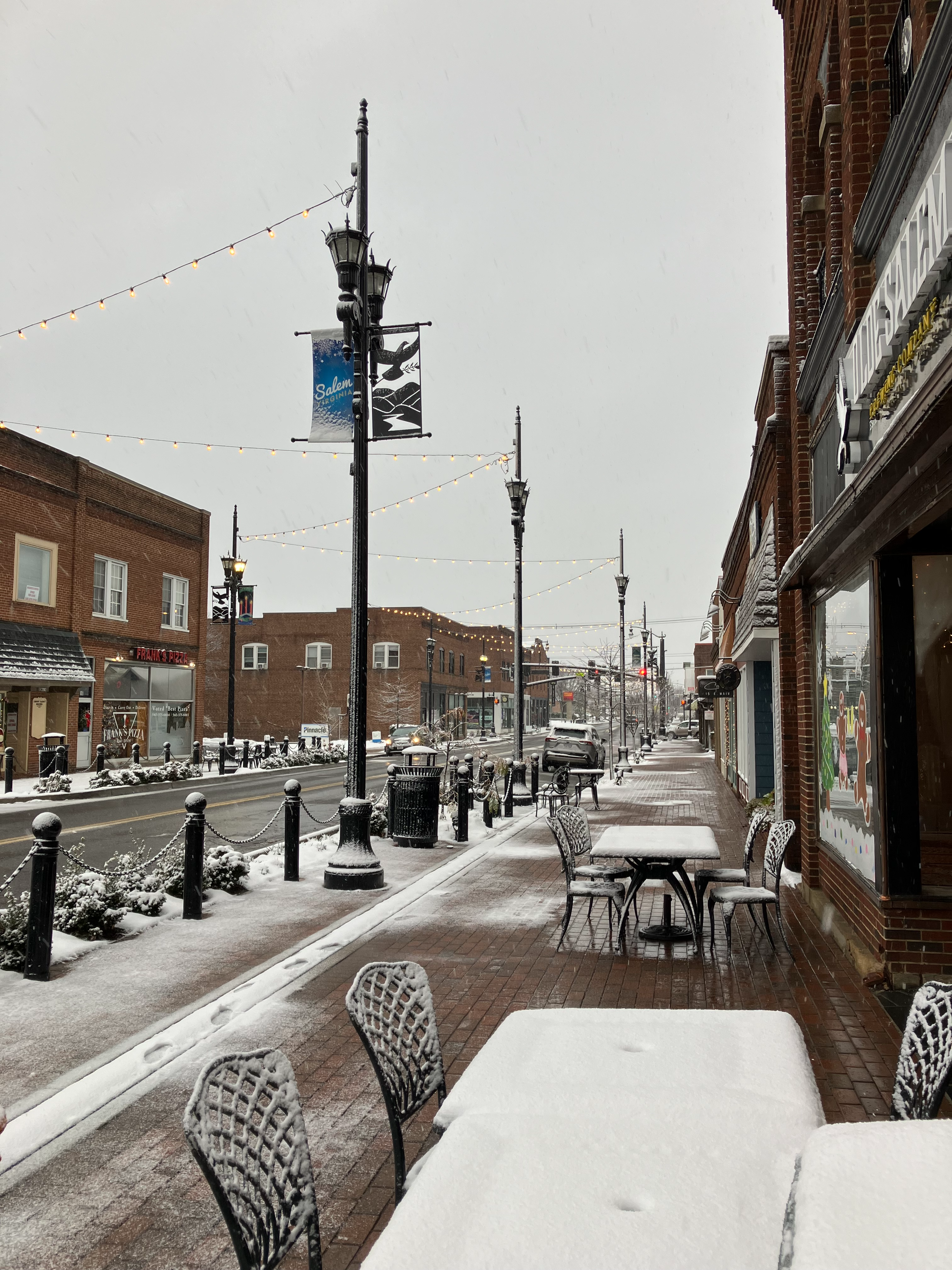
Extreme snow days can bring the same impacts to small businesses as any other natural disaster, such as hurricanes, floods, or fires. When it is a widespread incident, federal and state emergency loan funds may be available if a State of Emergency is issued. A quick refresher on how those resources rolled out in the aftermath of Hurricane Helene can be found here.
For more localized incidents, local governments and Main Street programs can provide support to small businesses by providing information and moral support as business owners troubleshoot property damage and lost sales revenue. Here are some steps to share with business owners in the immediate aftermath of disruptive and/or damaging weather events.
In the first 48 hours:
- Check in with your local Main Street organization for updates. Reach out to at-risk owners and see what kind of help that they need and identify emerging issues that cut across multiple businesses.
- Snow day promotions, if it is safe to be open, businesses can offer discounts or curbside pickup to generate foot traffic. Even for a brick-and-mortar business, it is important to generate foot traffic by letting the community know you’re open with a social media post, text, or e-mail.
- Gift cards can be sold during weather closures for immediate cash flow to individual businesses. Local main street organizations, like those in Gloucester and Lexington, can facilitate district-wide gift card programs.
- Use downtime strategically if staff are already scheduled, to deep clean facilities, restock and merchandise displays, take inventory, and/or photograph products for digital assets on social media or online retail.
During the first week:
- Advertise extended hours, if feasible, opening early or staying late to accommodate community schedules.
- Remind customers about local businesses and retain their loyalty through social and earned media, telling the story of the district and its businesses as was done in Manassas. This can drive sympathy spending (it’s real).
Preparing for future snow days:
- Build a “snow-proof” sales channel. Businesses don’t need full e-commerce, but they should have a plan and/or digital infrastructure ready to go. In addition to websites, businesses can take direct orders via messaging apps, over the phone and by email. Depending on the good or service being purchased, physical deliveries can be hand-delivered for locals, picked up in person or delayed until a later date.
- A weather contingency plan should be part of every business’s operating policies and procedures. This plan should include skeleton staffing for storms, a clear closure and promotional playbook, and preprepared email sequences to communicate with customers.
- A snowy-day fund or financial buffer that can fully resource the weather contingency plan will reduce stress when the weather turns. This fund can be financed through savings, a line of credit, or a weather-triggered insurance policy, but only if the financial tools have been secured in advance.
Weathering longer-term economic dislocation:
If commerce is disrupted for a longer stretch of time, schedule an appointment with a local Virginia Small Business Development Center (SBDC). SBDC counselors can connect business owners with state and federal funding resources that can help get the business back on track. The Virginia SBDC Economic Downturn Guide can also help business owners take control of their circumstances step by step, taking it one day at a time.
 Virginia Main Street