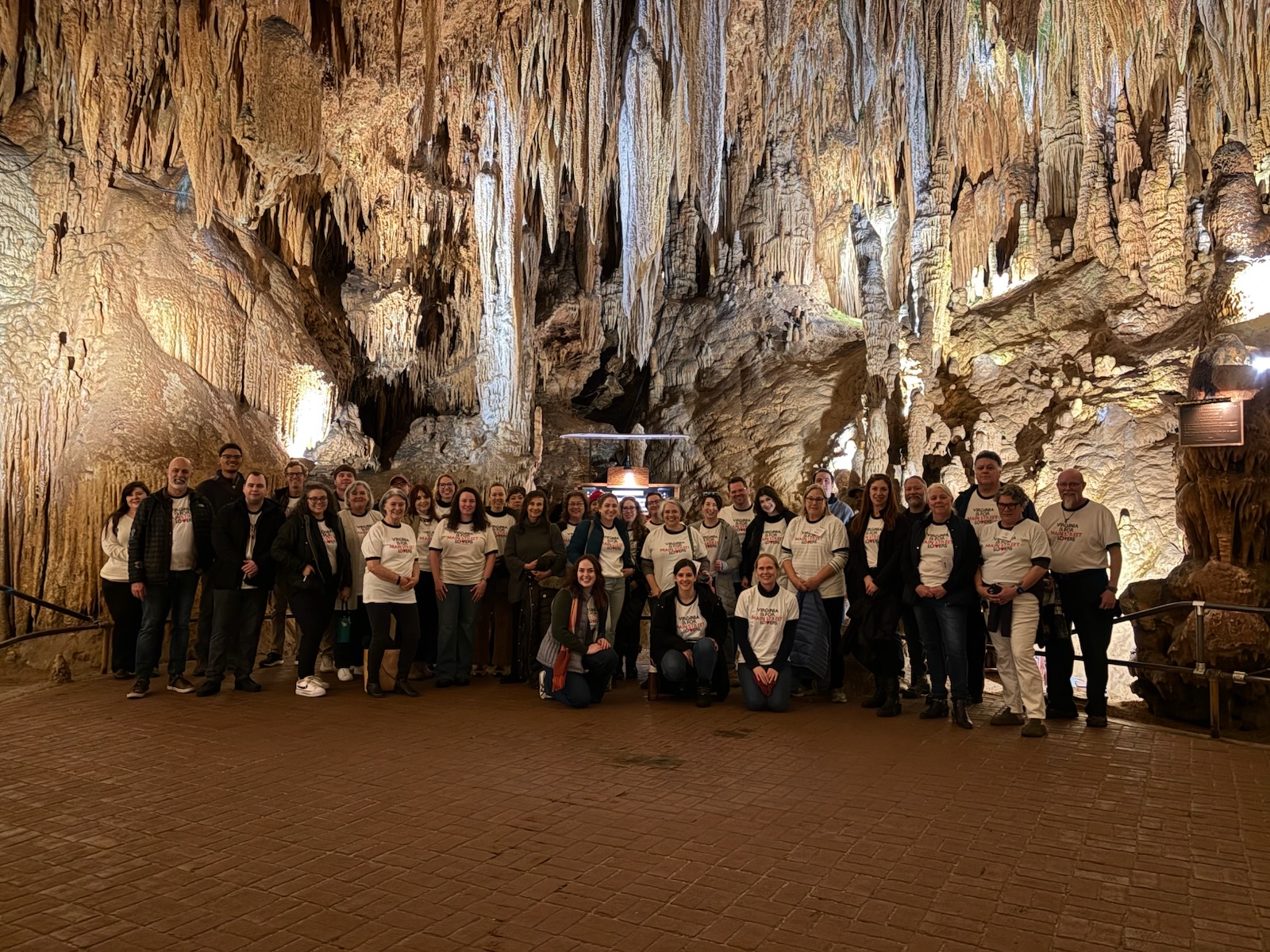
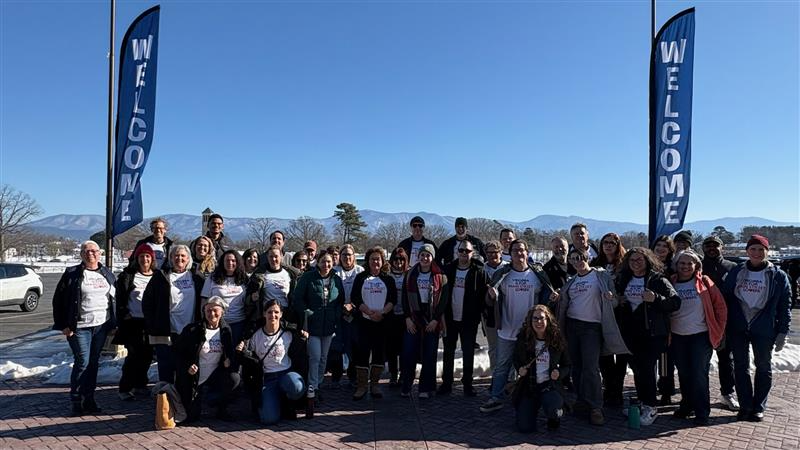
More than 30 Advancing Virginia Main Street (AVMS) leaders from across the Commonwealth gathered in Luray last week for the annual AVMS Directors’ Retreat, spending three days immersed in workshops, learning, and networking opportunities.
Thanks to a winter storm that swept Virginia just a week prior, which iced over many of the streets of Luray and left snow on the surrounding mountains, the town resembled the setting of a Hallmark film. Despite the chilling temperatures that might warrant fireside warming and hot cocoa, Main Streeters explored the community and appreciated the downtown and other tourism assets throughout the local area.
This retreat would not have been possible without the coordination and relationships of Luray Downtown Initiative’s Executive Director, Jackie Fox-Wood.
Appreciative Inquiry: Shifting to a Positive Mindset
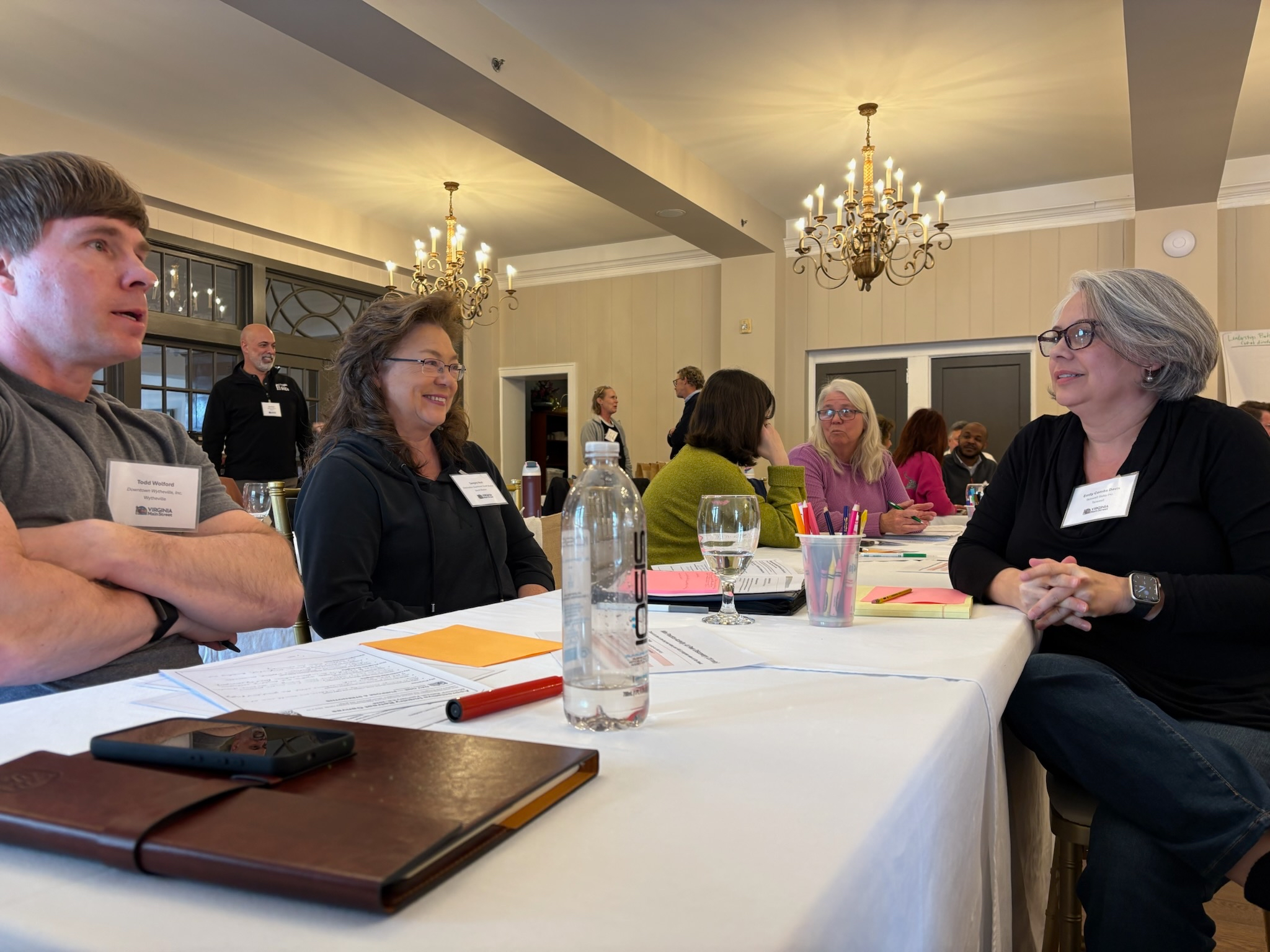
Kyle Meyer, Virginia Main Street’s Program Administrator for Eastern Virginia, kicked off the retreat by setting the stage, making sure directors were framing their discussions using Appreciative Inquiry.
“What is Appreciative Inquiry?” you ask. Well, Kyle has answered that question in another blog post, but it’s a strengths-based approach to leadership that focuses on identifying what works well within an organization or community. Unlike traditional problem-solving methods that focus on the challenges of a community, Appreciative Inquiry encourages participants to reframe questions with a focus on opportunities.
Main Street leaders spend a great deal of time in their districts; it’s practically their second home, if not their actual home. With enough time spent in a community, we can grow to love it. But there is also an inclination to become critical, constantly spotting areas for improvement without going into the situation with a positive or productive mindset.
Instead of asking “What’s wrong in our community?” Appreciative Inquiry reframes the question to ask “What’s working in our community — and why?” Appreciative Inquiry simply changes where we begin. By starting with strengths rather than shortcomings, leaders can have conversations in a more positive light.
Virginia Tourism Corporation: Get the Word Out About Your Main Street
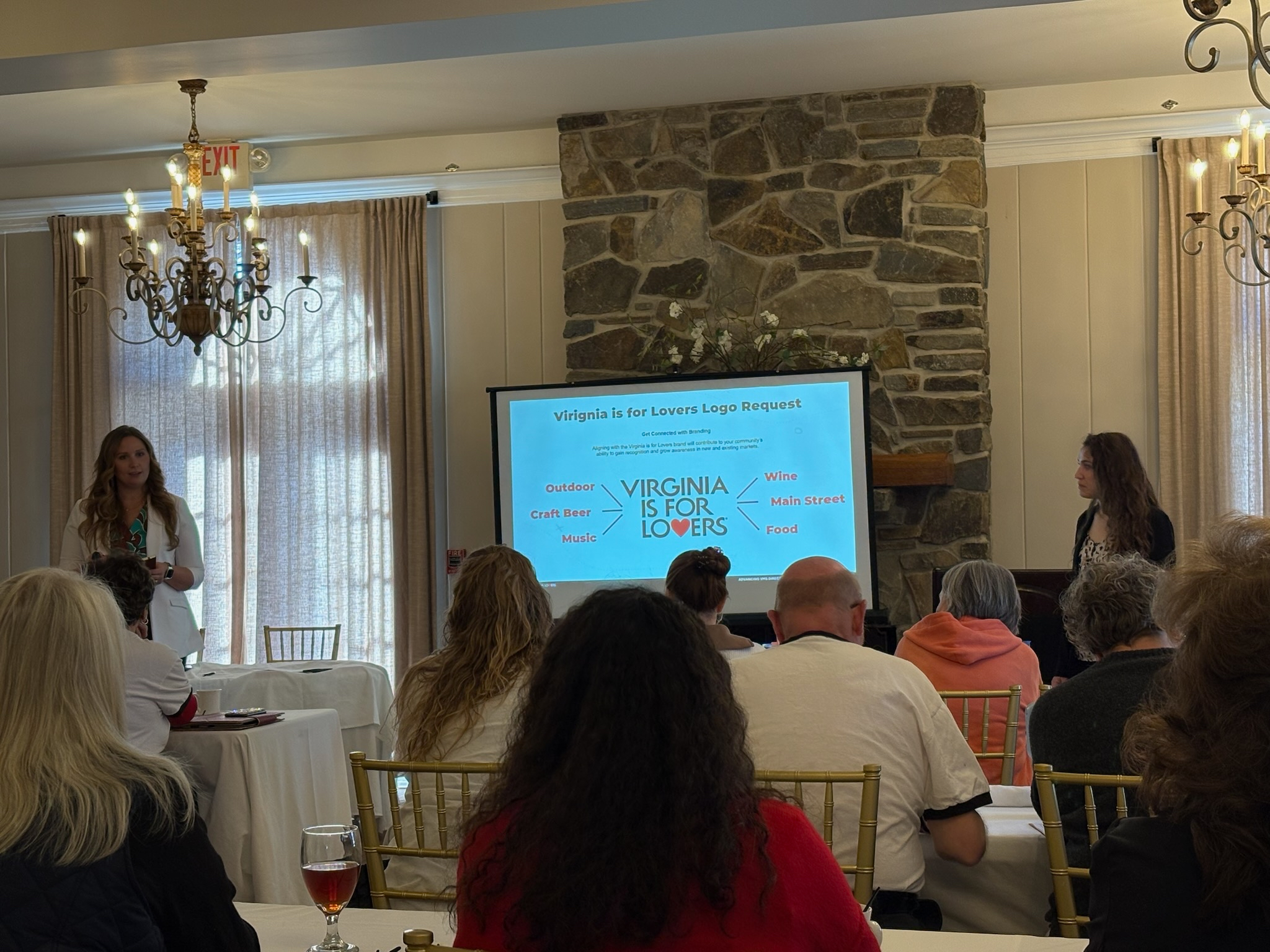
The iconic “Virginia is for Lovers” tagline was born through the Virginia Tourism Corporation (VTC), a state agency dedicated to promoting tourism across the Commonwealth. VTC promotes all of the assets of Virginia, and its Main Streets, whether it’s a placemaking project, small business, or the beauty of Main Street – anything that would attract a tourist.
VTC is about much more than tourism promotion alone. It offers a suite of resources for Destination Marketing Organizations and small businesses alike, including marketing grants, visitor psychographic research, and access to professional photos, among other tools.
Exploring Local and Regional Assets: “Spelunking” in Luray Caverns
On the topic of promoting and appreciating local assets, Virginia Main Street could not have all of the Main Street leaders come to Luray without witnessing the major attraction just outside of Luray Downtown Initiative’s district: Luray Caverns. The caverns have a following of their own, but it’s more than likely that those visitors also are staying, shopping, and dining in the neighboring town of Luray.
It’s important to remember that although Main Street work is typically focused on the historic commercial district or downtown core, that does not mean communities should work in silos. In fact, they should embrace the attractions of the surrounding areas. Recognizing and understanding nearby attractions is essential, especially when considering where visitors to your Main Street are coming from (or heading to!).
Federal Reserve Bank of Richmond: Let’s Talk Money
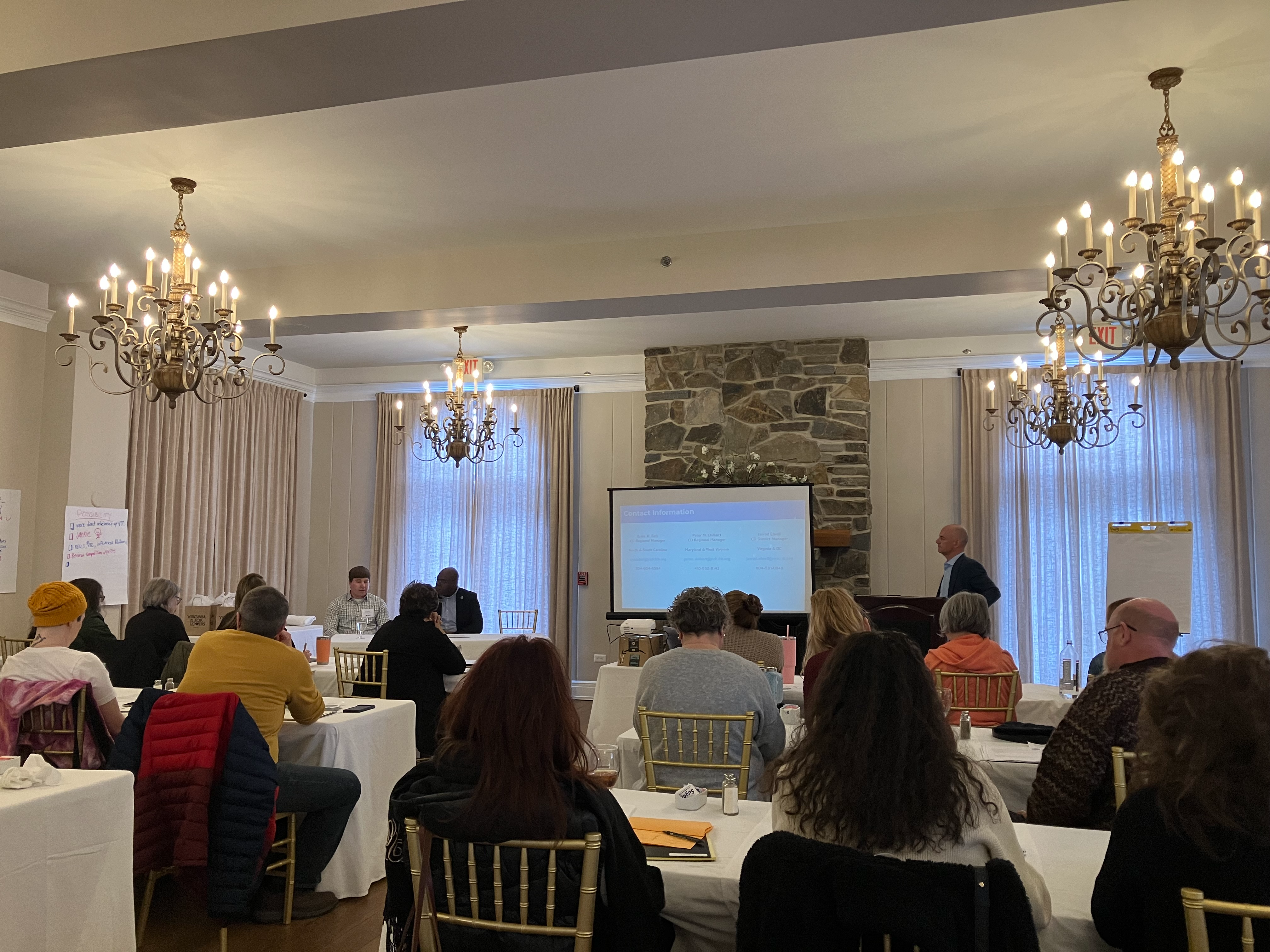
The retreat concluded with a final presentation and panel hosted by Jarrod Elwell, Community Development Regional Manager for the Federal Reserve Bank of Richmond. The presentation emphasized the importance of partnering with banks and Community Development Financial Institutions, while understanding the limitations of the Community Reinvestment Act (CRA) of 1977.
CRA encourages banks to help meet the credit needs of the communities they serve. A bank’s presence or service to a community can take shape in many forms, from an ATM to offering loans or operating a local branch. Each of these actions means a financial institution can, or may be obligated to, support the communities in which they operate in. And support to Main Street organizations can come in various forms, such as sponsorships, in-kind support, and loan capital for downtown businesses or redevelopment projects.
That’s where the panel came in: Downtown Wytheville’s Todd Wolford partnered with the Vice-President of Community Development Lender at Carter Bank & Trust, James Cabler, to explain how a bank and Main Street organization can work together to mutually benefit one another. A well-trusted Main Street organization gains a programming sponsor, and a local bank has the opportunity to get its name out there.
 Virginia Main Street