Main Street directors often operate between three worlds. Investors want predictability and mitigation of risks. Local governments want growth, tax revenue, and long-term stability. Boards want to protect identity while supporting momentum. As the local Main Street authority, directors often walk a fine line as liaisons between the private and public sectors. Each sector may speak a different language, but all share a common goal: lowering risk.
When expectations aren’t clear, projects stall. Staff spend time correcting drawings, and developers revise plans midstream, increasing costs and uncertainty. Momentum slows, and confidence erodes.
Clear design tools reduce that friction before it begins.
Communities use several types of design tools, and understanding their distinctions matters. Pattern books and design manuals are educational tools that build shared understanding. Design guidelines, when formally adopted, establish consistent review standards.
Good design guidelines do not freeze a downtown in time. They provide a framework for change, one that allows density, reinvestment, and evolution while maintaining the qualities that make Main Street successful.
Communities sometimes hesitate to pursue design tools out of concern that they may discourage investment or limit flexibility. In practice, well-crafted tools often do the opposite. They clarify expectations early, reduce uncertainty for applicants, and support growth that reinforces the district’s long-term value.
Design tools document a community’s vision. They do not impose a one-size-fits-all solution. When crafted locally, they reflect local priorities, scale, and character.
Vision is observed, clarified, and agreed upon. That work often begins with simple steps: walking the district; identifying recurring patterns in scale and storefront rhythm; discussing what feels appropriate and what feels out of place; and listening to property owners, staff, and investors. Over time, a shared vocabulary around compatibility, massing, transparency, and street enclosure transforms instinct into vision.
Predictability improves budgeting, financing confidence, and project timelines.
Downtowns thrive on predictability. Clear expectations lower development risk by defining compatibility upfront. They reduce costly redesign and review delays, protect the tax base from incompatible projects, and strengthen readiness for grant and preservation funding.
Design guidelines are about guiding growth, so every project builds on what is already working.
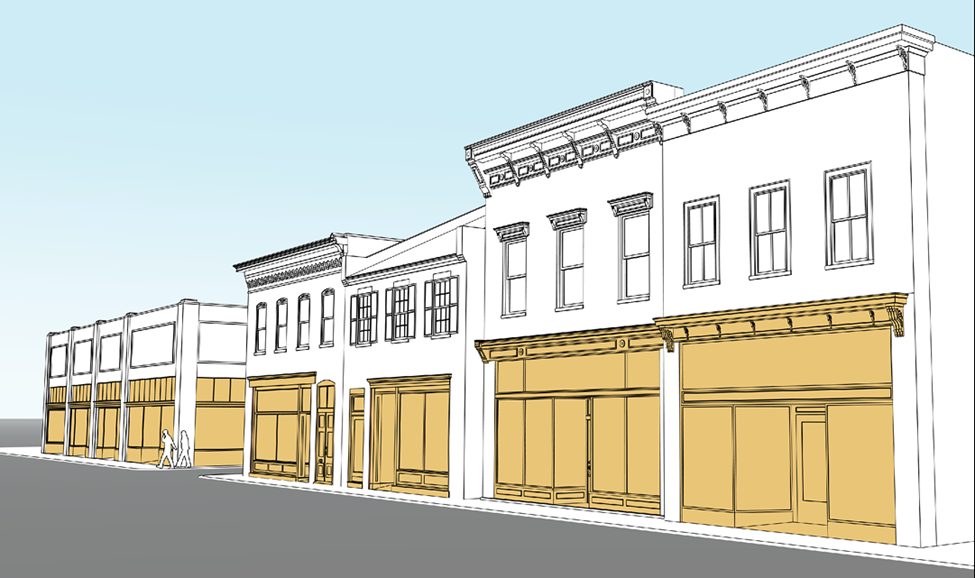
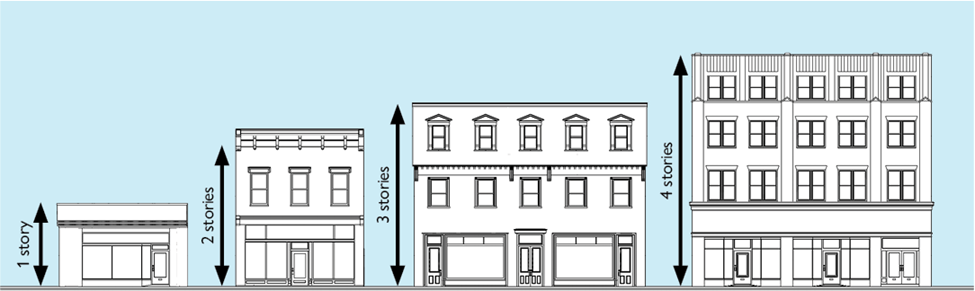
To support directors interested in beginning this conversation on design tools, a sample Downtown Design Glossary is available as a starting point. The glossary provides a shared language for discussing scale, rhythm, compatibility, and street character, both within Main Street organizations and with municipal partners and developers.
When everyone is using the same terms, conversations become clearer and more productive. The glossary is intended to be downloaded, adapted, and customized to reflect local priorities, not copied wholesale.
Link: Downtown Design Glossary
When used intentionally, design tools help ensure that each new project builds on what is already working—economically, culturally, and physically.
Communities approach design tools at different stages of readiness. Some begin with informal education and walking discussions before considering formal standards. The goal is to move thoughtfully.
You do not need to have all the answers at the outset. Start by observing what already works in your downtown, and building a shared vocabulary. Start by inviting conversation.
Start with clarity. Build confidence. Shape growth with intention.
Directors interested in seeing sample educational materials used during recent board and city leadership sessions are welcome to reach out to Sami or Susan through VMS Design Services at Commonwealth Preservation Group, vmsadmin@commonwealthpreservationgroup.com.
Author
Susan V. Lancaster is the Virginia Main Street Design Manager at Commonwealth Preservation Group (CPG), working with local Main Street programs and municipal partners to strengthen downtown growth through practical, community-based design tools. She can be reached at susan@commonwealthpreservationgroup.com.
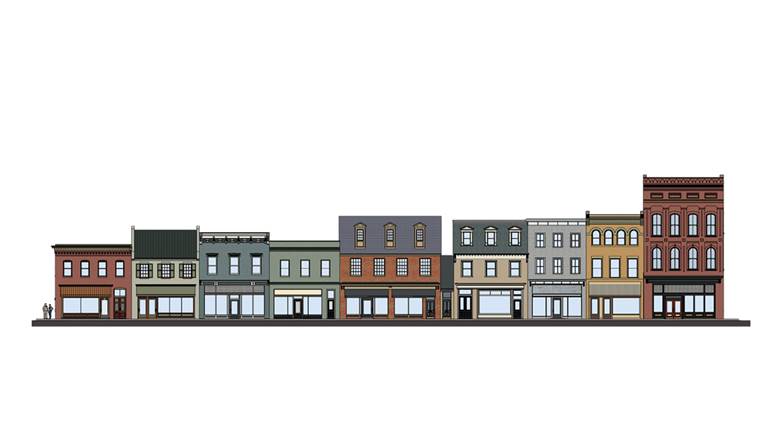
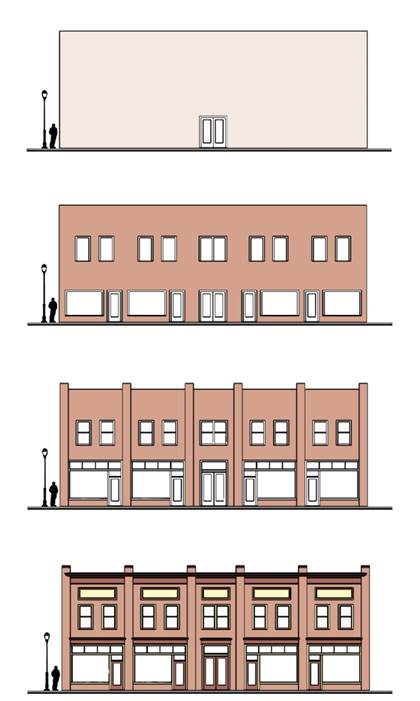
*Graphics: Drawings are adapted from the Staunton Historic District Design Guidelines (2018).
 Virginia Main Street