
As a Virginia Main Street (VMS) program administrator, I’ve had the privilege of learning and implementing the Appreciative Inquiry (AI) process within the communities I serve. This approach not only celebrates successes but also inspires collaborative visioning for the future—an ideal strategy and very good match for Main Street nonprofit organizations looking to enhance impact.
What is Appreciative Inquiry?
Appreciative Inquiry is a strength-based approach that focuses on identifying and amplifying what works well within an organization or community. Unlike traditional problem-solving methods that often concentrate on challenges, AI encourages participants to explore their successes and envision a brighter future. This shift in perspective fosters a culture of positivity and collaboration, making it particularly effective for revitalizing Main Street initiatives.
Implementing Appreciative Inquiry in My Region
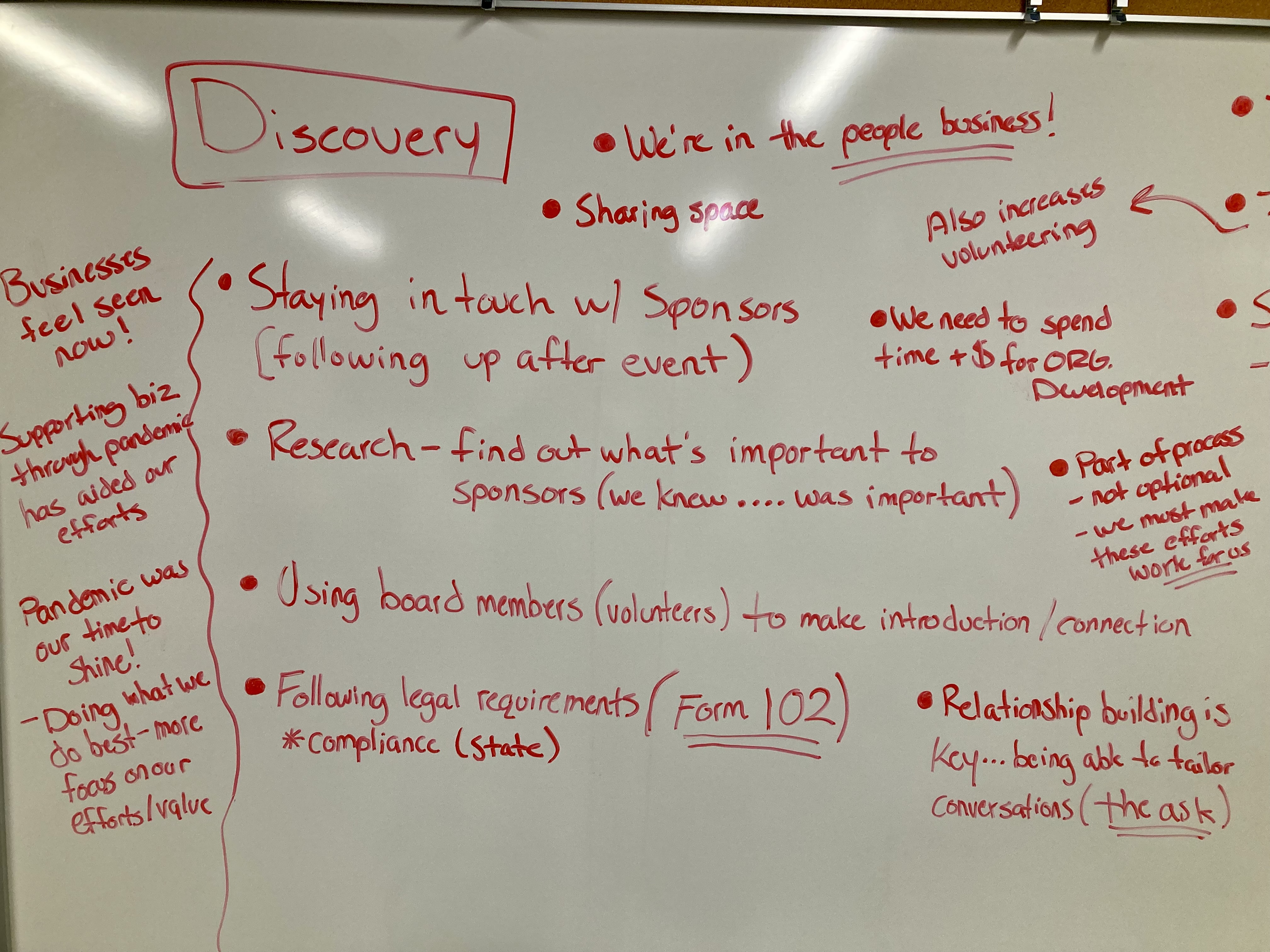
In my role, I have facilitated AI sessions with various Main Street communities in Virginia’s eastern region and integrated the best of these insights into VMS program meetings. I have witnessed firsthand the transformative effects of this process, such as the ease of motivating conversation, reaching solutions more quickly, and identifying tangible, quantifiable outcomes.
Planning sessions begin with inviting key stakeholders to ensure a diverse representation of voices. I prepare the environment with materials like sticky notes and large pads, organizing them into groupings labeled Inquire, Imagine, Innovate, and Inspire to Implement. Discovery-Dream-Design-Destiny can also be used, the classic AI 4-D framework. Both emphasize a positive approach to change.
1. Inquire Phase:

We kick off by celebrating successes. Stakeholders share their achievements, from thriving local businesses to successful community events. This phase not only highlights strengths but also builds a sense of pride and collective ownership among participants. As you can imagine, discussing successes encourages lively conversations!
2. Imagine Phase:
Next, we move into envisioning the future. I encourage stakeholders to think creatively about enhancing their successes. Questions such as “What if we could create a streetscape that helps visitors linger longer and spend more?” inspire imaginative ideas and open the door to new possibilities, reinforcing their belief in what can be achieved.
3. Innovate Phase:
Once we have a vision, we focus on actionable steps to make it a reality. Participants collaborate to discuss necessary resources, potential outcomes, and how to engage the broader community. This collective brainstorming fosters a sense of partnership and commitment to the shared vision.
4. Inspire to Implement Phase:
Finally, we develop a clear action plan, assigning roles and setting milestones to maintain momentum. I emphasize the importance of follow-up, encouraging regular check-ins to ensure accountability and celebrate progress. Who doesn’t love a good celebration?
Results and Impact
The results of utilizing Appreciative Inquiry are noteworthy. Participants leave these sessions feeling more motivated and engaged, equipped with a clear vision and actionable plans. The collaborative atmosphere nurtures stronger relationships among participants, leading to enhanced community buy-in for future initiatives.
Through my experiences with the AI process, I’ve seen firsthand how it empowers Main Street communities in Virginia to envision and create positive outcomes. For any community looking to invigorate its planning process, I wholeheartedly recommend exploring Appreciative Inquiry. This approach not only strengthens engagement but also fosters a collective vision that drives meaningful change. Together, we can revitalize our Main Streets and create vibrant futures for our communities.

Image Credit: The Center for Appreciative Inquiry
Image Credit: Kyle Meyer
 Virginia Main Street