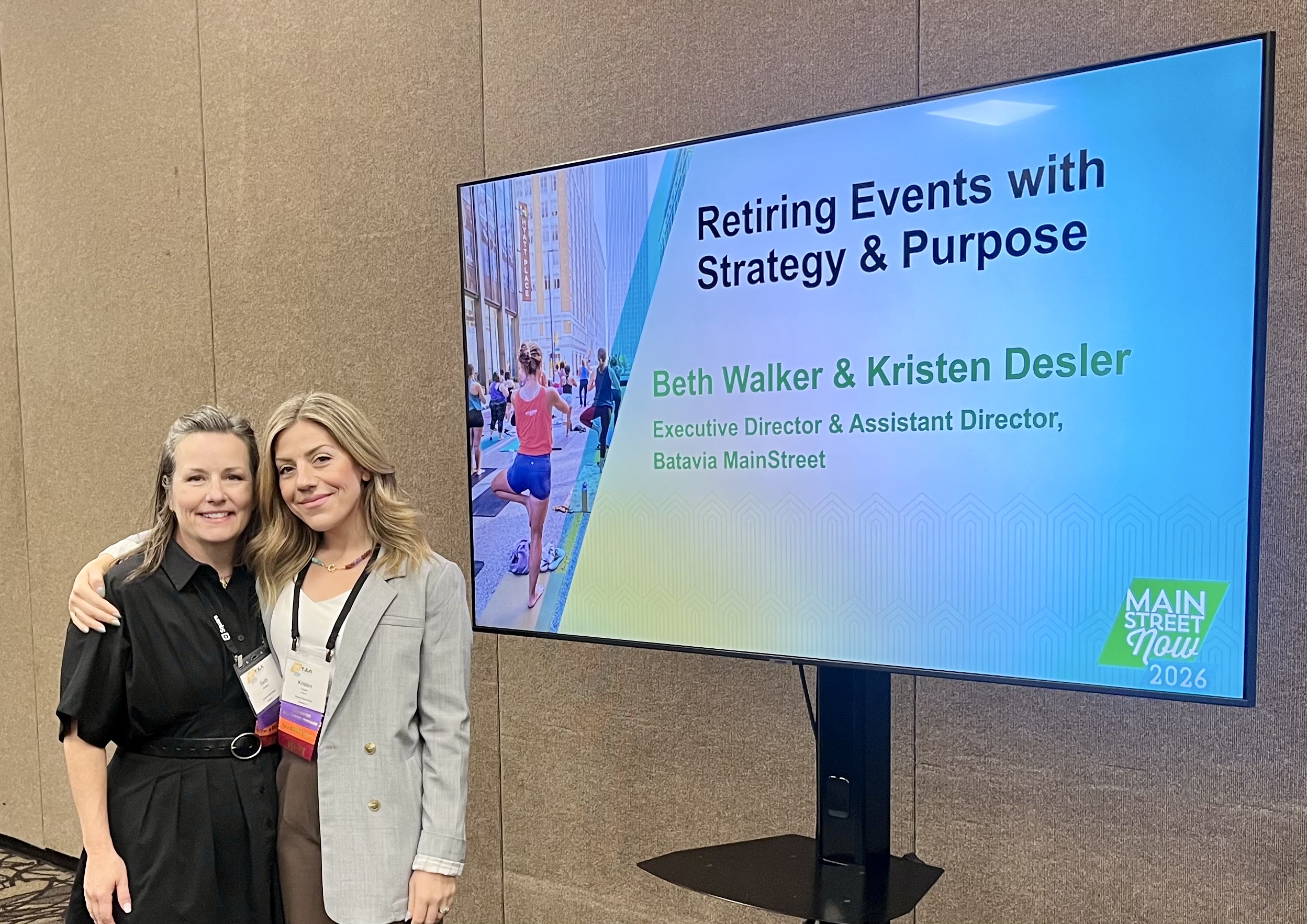
One of the most valuable sessions I attended at the 2026 Main Street Now Conference in Tulsa, Oklahoma, was Retiring Events with Strategy and Purpose, presented by Beth Walker, Executive Director, and Kristen Desler, Assistant Director, of Batavia MainStreet, Illinois. Their presentation offered a refreshing reminder that successful downtown revitalization is not about doing more—it is about doing what matters most. Special thanks to Beth and Kristen for openly sharing their organization’s journey, lessons learned, and practical tools.
Approaching their work through a lens of continuous improvement, Batavia MainStreet developed an event evaluation framework after recognizing that some long-standing events were consuming significant staff and volunteer resources without delivering meaningful economic or organizational outcomes. They challenged themselves with important questions: Are events still advancing the mission? Are businesses benefiting? Are volunteers energized? Are events being continued simply because “we’ve always done them”?

The results were remarkable. Since 2019, Batavia has reduced its annual event portfolio while increasing overall profits from approximately $88,000 to more than $157,000. Along the way, they retired or transferred several resource-intensive events and invested more heavily in scalable programs such as farmers’ markets and boardwalk shops. These changes increased efficiency, strengthened sponsor relationships, improved vendor retention, and generated more predictable downtown activity.
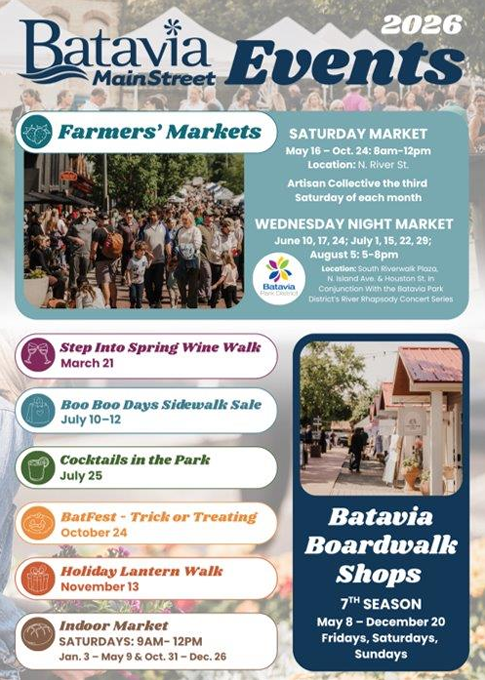
At the heart of their approach is a four-part evaluation framework: Mission Alignment, Financial Sustainability, Community Engagement, and Sponsor Value. Events are assessed based on factors such as business visibility, profitability, staff time, volunteer engagement, merchant participation, attendance, and sponsor retention. Using these criteria, organizations can determine whether an event should be kept, revamped, or retired.
One powerful example involved Batavia’s decision to retire its long-running Block Party and replace it with a Wine Walk. While the Block Party attracted thousands of attendees, it generated limited benefit for downtown businesses and required significant staff effort. The new Wine Walk brought visitors directly into storefronts, generated more than double the event revenue, attracted enthusiastic merchant participation, and created valuable customer data for future marketing efforts.
What resonated most with me was the Appreciative Inquiry spirit behind this process. Rather than focusing on what was failing, Batavia MainStreet asked: What was working? What created the greatest value? And, how limited resources could be aligned with their highest aspirations? This methodology can be applied in any Virginia Main Street community—or any nonprofit organization. By thoughtfully evaluating programs through the lens of mission, impact, and sustainability, organizations can create more vibrant downtowns, stronger businesses, and healthier teams while ensuring their energy is invested where it matters most.
Check out the session presentation here for a deeper dive.
Photo credits: Batavia MainStreet

